
Ep. 36: My AI Wishlist
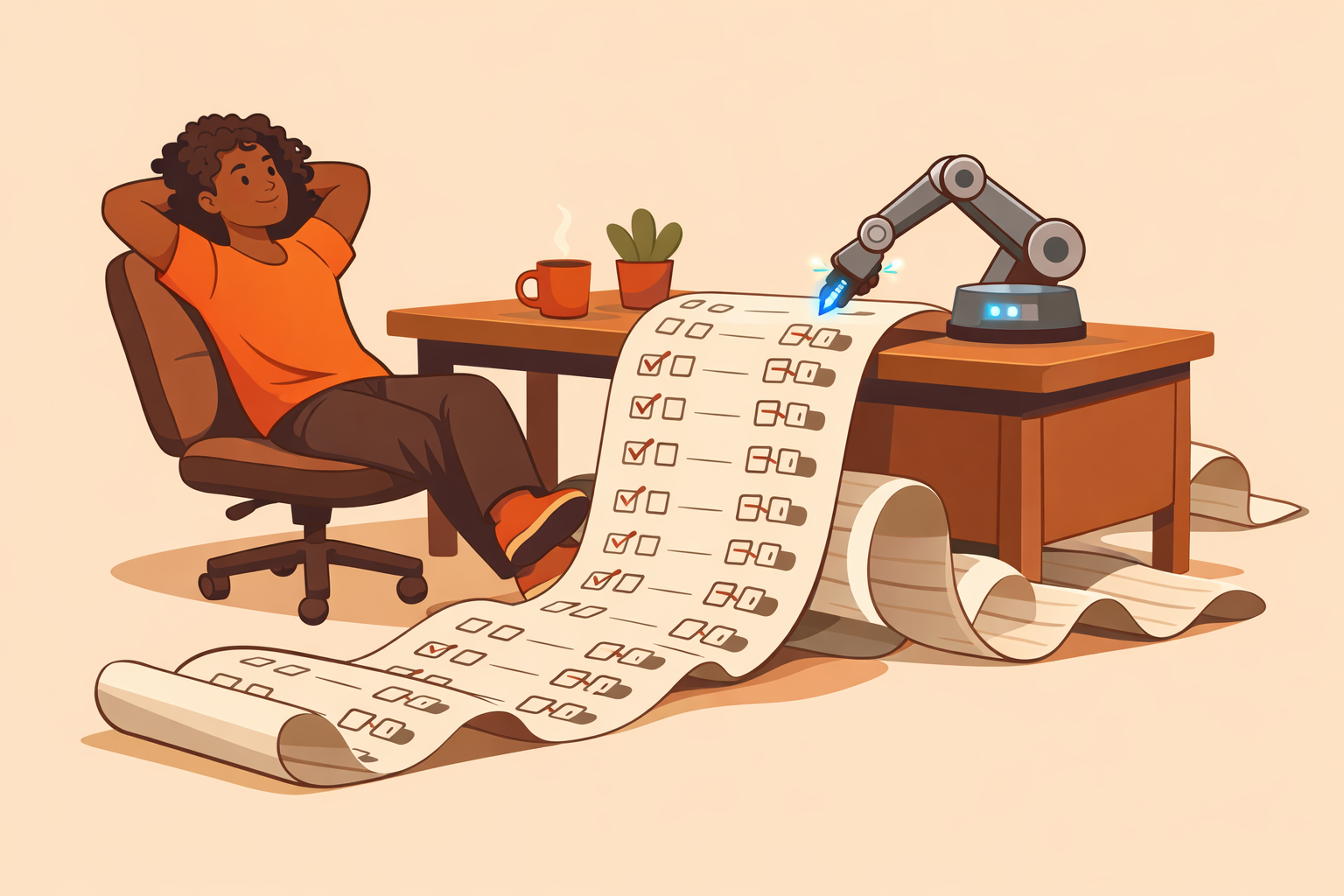
In this episode I share my AI wishlist, two specific things I plan to build (one day) using Claude Code: an automated podcast production workflow and a custom client dashboard for my 1:1 messaging coaching services. I make the case that the era of exponential AI capability growth has leveled off, and the real gains now come from how you use it and what you build with it. Overall, this episode is a grounded, practical look at agentic AI and what it actually looks like to start putting it to work.
Growth Spurts and the Horizontal “Curve”
The other day I was talking with Lex about this the other day, and as is the case with so many things, growth occurs in spurts, and those spurts tend to be exponential. We experience it with beach volleyball, were shit stays the same for months, and then suddenly you unlock a new skill, you practice it, and your progress line goes from flat horizontal to “up and to the right.” It’s dope.
There was a lot of that up and to the right exponential growth in the early years of LLMs, and yes, it’s wild to say “early years” because we’re only 3.5 years in (GPT-3.5 was released in November 2022), but objectively, things are not being shipped as quickly as they once were. LLMs are not improving as quickly as they once were.
Now, if you’re a Claude Code die-hard, you might push back here, and that’s fair. But for 99% of people who use LLMs, the changes in capability are no longer exponential. We’re now in a time where it’s about putting what we have to work and exploring all that is possible.
Brief side note: for OpenAI specifically, we witnessed the end of those exponential growth spurts with the release of GPT-5 in August 2025. Until then, overzealous CEOs like Sam Altman were doubling down on the idea that you could keep scaling the capabilities of LLMs by just making them bigger (more parameters). And until the release of GPT-5, that had been the case. Then, OpenAI rolled out that model, it flopped, and bigger stopped meaning better.
So like I was saying, the growth curve is now horizontal, and the gains to be made are in how you’re using it and what projects you’re having AI complete.
Leaning into Agentic AI
I was very intentional with that wording at the end of the previous section: projects you’re having it complete, because that is the next level of using AI: Leaning into agentic AI.
I’ve talked about agentic AI in previous episodes, but as a quick refresher, agentic AI is AI that can actually do things. It can execute actions and complete tasks, not just answer questions.
With that in mind, what I want to spend the rest of this episode on is my very short wishlist for AI, aka the things that I want to (and am going to) use AI, more specifically Claude Code, to build.
In the spirit of brevity, I’m gonna refer you back to episode 29 for the deep dive into Claude Code and Claude Cowork, but the TLDR is:
- Claude Code is Anthropic’s agentic tool, and Claude Cowork is Anthropic’s agentic-like tool
- Both can execute tasks but Claude Code has way more functionality
- Both use Anthropic’s various LLM models (Opus, Sonnet) as their “brain.” I know, confusing and weird. Stick with me.
Why I’m Sharing This
My goal in sharing my AI wishlist is twofold:
- It puts me on the hook to actually build these things, which means I learn and can then teach you.
- It gives you examples of how this tech can be used, which will hopefully spark some ideas for you.
The entire marketing for LLMs has been very backward from a business standpoint. Traditionally, the order of operations is you find a problem and then create and market a solution. With LLMs, the creators rolled it out to the public and said, “Here’s a solution, go find a problem.”
To that end, for many people, identifying use cases has (logically) been a slow process overall. This means that actually using the tech and subsequently understanding what exactly it is has also been a slow process. Thus, it’s my hope that giving you examples of how I’m using this more advanced version of the Claude will highlight ways that it might be helpful for you, ultimately prompting to you try it and learn about it by doing.
So, without further ado, my (very short) AI wishlist.
Wishlist Item 1: Automated Podcast Workflow
First up: an automated workflow for this podcast.
Y’all already know I’m never outsourcing the actual creative portion of things. What I’m looking to outsource is what’s largely considered “the last mile”, which typically involves a lot of copy and pasting.
Here’s what the current process looks like:
Write the outline. Record the podcast. Paste the outline into Claude, have Claude generate the show notes and companion. Copy show notes to a Google Doc. Copy companion to a Google Doc. Edit both. Copy show notes to an episode post on my website. Upload the episode MP3 and cover art, schedule the episode. Copy the companion to an email template in Kit, schedule the newsletter. Copy the companion to a blog post on my website. Generate a featured image (which Gemini has been sucking at lately). Upload that to the blog post, schedule it. Copy the podcast episode link and blog link to a master Google Sheet.
As you can see, lots of copy paste. Annoying AF.
Fun fact: Claude Code can do this for me.
I’ll have to give it access to my website, my Kit account, and Google Drive, but it can absolutely handle all of those copy-paste steps. Then I’ll go in, check it, schedule it, done. Way better.
How exactly this happens is something I’ll cover in a later episode, because at this moment I only know that it can for sure complete these tasks via a combination of a comprehensive CLAUDE.md file and MCP server integrations. But once I build it out and get it running, I’ll be sharing what I understand with you.
I actually wanted to build out the automation and use it for this episode, but Claude said it would take a few hours to build out and that I should just stick to my normal routine for this episode given my time constraints. I agreed, and it stays on the wishlist for now, but I’ll definitely be tackling it in the next few weeks.
Wishlist Item 2: Custom Client Dashboard
Second, last, and final item on the wishlist: A personalized dashboard to manage my 1:1 messaging coaching clients.
For those of you who don’t know, I rolled out a bunch of new messaging services for my main biz, The Movement Maestro. These services have a start date, stop date, email correspondence, due dates for forms, feedback end dates, and client-specific URLs; bits of information that would be nice to have in one place and repetitive emails that would be great to generate with the click of a button.
You might be thinking, “Maestro, that’s a CRM.” And you’re right. But all of the CRMs out there, like so much tech out there, are bloated and expensive, and I just need a few of the features. So I’m going to build out exactly what I need.
For this, I could build it with regular Claude, have it generate the code, plug it into Cursor, and create a custom Next.js web app. But I think I’m gonna continue to lean into Claude Code and have it build it out for me. That is the power of these agentic tools.
With an LLM as the “brain” you literally type: “Build me this.”, and it executes. Now, clearly there’s more to it than that (troubleshooting and debugging are very real things), but I want to plant the seed that at its essence, that is what’s possible.
How I Used AI This Week
Each episode I share a quick example of how I used AI that week.
This week, as you may have guessed, I used Claude for a ton of planning around those wishlist items that I just shared. I chatted with Claude about what was possible, and worth noting, I did have to prompt it to suggest using Claude Code to execute that automated workflow. In true LLM fashion, it often just goes along with what you’re saying and I had expressed familiarity with Google Apps Script and it ran with that. Yes, that could be a viable approach with some API keys, but Claude Code is a way better option.
What I’d love for you to take from this: ask Claude how it can help you. Think about any repetitive tasks you have and ask Claude how it can help you automate them. This is not at all about replacing creativity. Absolutely not. This is about offloading the repetitive, redundant tasks that add up, and from that creating more space for creativity.
Da Wrap-up
The era of exponential AI progress has leveled off, and the real opportunity now is in how you use it and what you build with it. Giddy up.